The Solutions Already Exist: Inside UCR Group with Keith Cook
As global collaboration becomes less predictable, where critical technologies are invented, made and owned has never mattered more. For the UK, sovereign capability depends on more than good ideas - it depends on keeping the science and the companies developing the frontiers of research.
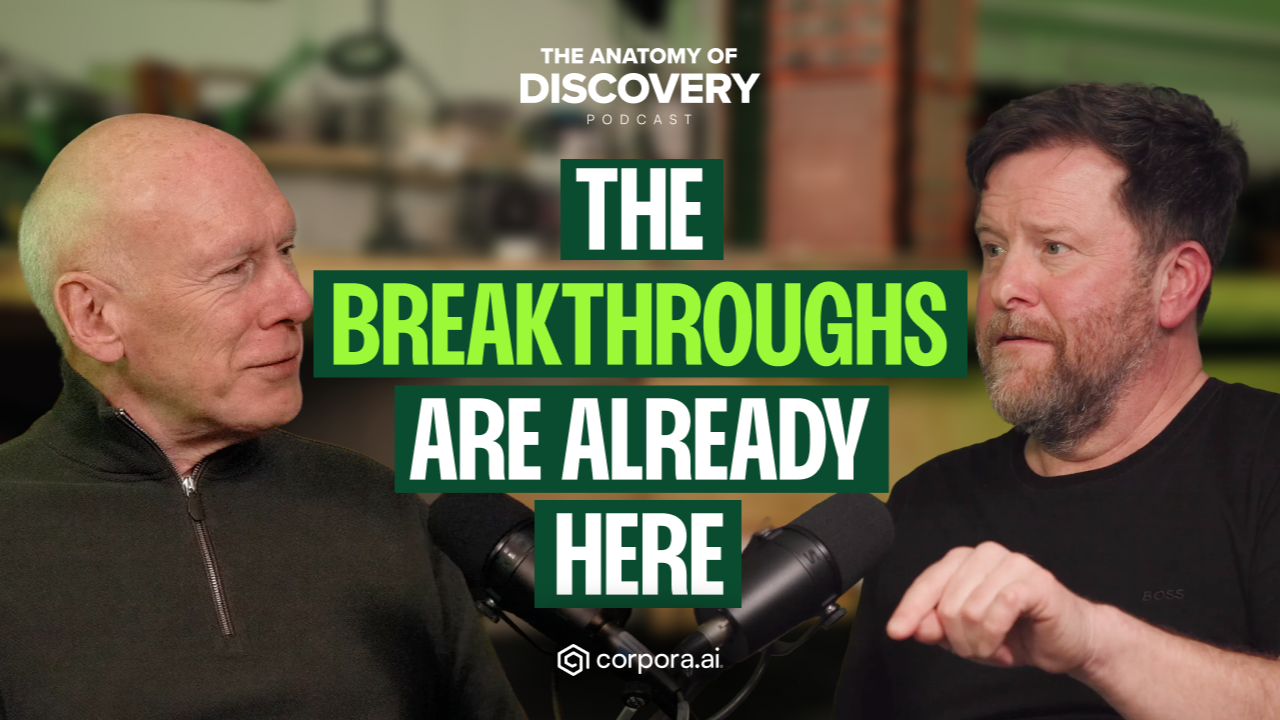
That’s why our latest podcast episode took Mel Morris CBE to UCR Group, where CEO Keith Cook and his team are working on advanced materials.
We have the pleasure of sharing a feature piece written by Keith himself, reflecting on the conversation, his thoughts on their science, and the future of research.
Enjoy reading!
A playground for physicists
From the outside, UCR looks unassuming. Inside, it’s full of technologies with real-world impact: low-energy pyrolysis producing green gas and biofuel, materials I believe no one else can currently make, and technologies that reduce the power other devices need.
At the heart of UCR’s work is a plasma synthesis process that creates ceramics without high-energy sintering. The result is a layer under 18 micrometres thick that fuses with the underlying metal to form a new material. It won’t peel, corrode or come away. The same principle applies to very different problems:
- Marine: Exploring ceramic treatments to improve resistance to corrosion, electrical effects and cavitation erosion on ship propellers.
- Medical: Potential ceramic structures capable of controlled medication release from implant surfaces.
- Energy: In testing conducted, UCR reported a 27% operational efficiency gain for gas turbines in highly corrosive environments through advanced material treatment.
- Power: smarter ways to transfer energy, from busbars to solar panels and grid stability
For us, the many applications are not evidence of a scattered research strategy. They share a common foundation: the underlying science and the capability to apply it differently.
By changing a material’s characteristics, UCR can change the performance of a component and potentially the entire device. That’s what connects all our research programmes: material innovation makes the component, makes the device, makes the unprecedented performance.
The cost of crossing disciplines
That breadth comes with a challenge. Working across many domains means navigating many overlapping patent landscapes, often described in different technical language. As explained, simply confirming you’re on a path no one else has taken can mean months of searching. Meanwhile, better-resourced competitors use IP strategies to block newcomers.
The UK spends £billions a year on this kind of patent and prior art research. Most of that time doesn’t move innovation forward - it only checks whether the way is clear.
There is also a less obvious challenge: a solution may already exist in another scientific discipline, described in unfamiliar terminology or developed for an entirely different application. Recognising that connection can be just as important as identifying a patent that might prevent commercialisation.
Evidence before samples
Once we at UCR understand what a customer needs, it can make and iterate on materials quickly. But one sample is rarely enough. Customers and investors want to see the data, and a compelling, well-supported case for pursuing a route. Getting there starts with defining the problem properly.
Because customers often arrive with an existing component and ask for better performance. But what if the material, design or manufacturing method selected years earlier is itself the limitation? Sometimes the most effective solution requires going back several stages, reconsidering accepted assumptions and exploring alternatives that were never part of the original specification.
The challenge is not always finding a better answer. Sometimes it is recognising that we may have been asking the wrong question.
Time is the UK’s competitive edge
Meanwhile, the rate of change is increasing, the UK needs to move faster.
With Corpora.ai's research technologies, UCR been able to transform the process. Our team can work through many iterations from idea to evidence before starting physical work, which narrows the scope and cuts months of research.
And that speed has knock-on effects. Faster, cheaper routes to proof of concept mean more chance of success and expertise too.
Understanding the problem before the solution
Many AI tools are too quick to serve up an answer. The bigger opportunity here will be to help people understand the problem first, and for AI to work under its best condition alongside the human expertise. It will not replace researchers, but make them better at what they do.
Keith's advice for frontier researchers
Keep an open mind. Look far beyond your own discipline. As global collaboration becomes less certain and teams work more in isolation, our need to understand things deeply has never been greater. That means using tools you can trust: research without hallucination, with clear sources verifiable evidence and reasoning that can be examined and challenged.
As discussed with Mel when we recorded the podcast, the solutions to many of society’s problems are already out there. It just takes people willing to look. And it means recognising that innovation does not always begin with an entirely new scientific discovery.
Sometimes the underlying science is already understood. The materials exist. The mechanisms are known. But what has been missing is the connection between them.
The next breakthrough may not require an entirely new scientific discovery. It may require recognising a connection between things we already understand, but through our perception constraints we have never thought to bring them together.
For us at UCR, that is the foundation of a research philosophy in which material innovation can transform components, components can transform devices, and the resulting performance can challenge what was previously considered possible.
For the wider research community, it offers a simple but powerful question:
What becomes possible when we stop assuming that the way something has always been done is necessarily the best way to do it?
Some of the solutions to our greatest challenges may already be within reach. We simply need to know where and how to look.
Watch and listen to Episode 2 of The Anatomy of Discovery Podcast with Keith here.
Thank you for reading this month’s newsletter!
For any questions, please email [email protected]