
The Architecture of What's Next for Innovation

In this month's newsletter, we are excited to share a feature piece from Antonia Manoochehri, sharing her views on the UK's innovation ecosystem. Enjoy reading!
The Compulsion to Build
The Corpora team sat down with Antonia Manoochehri, Founder and CEO at Lumenai, to talk about her inner drive to innovate and why the next model of innovation is changing the narrative for female founders.
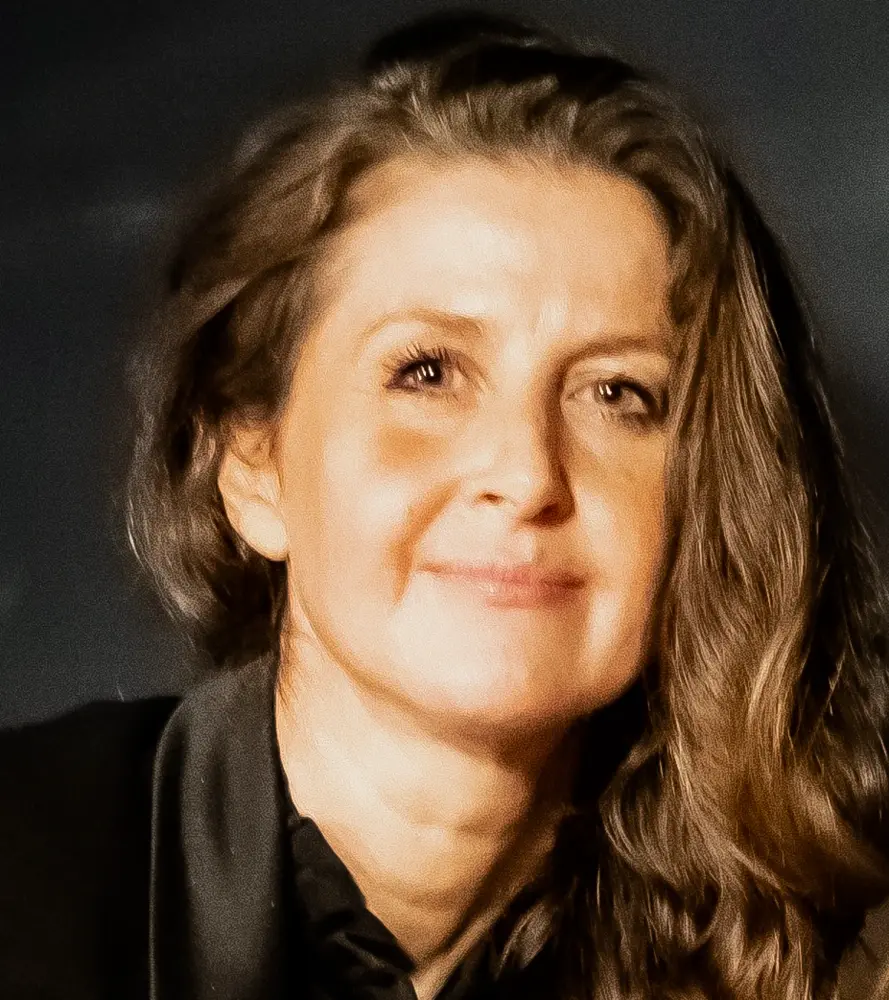
Founder and Academic Lead of Data Maturity Matters.
Lumenai is a social venture that exists to unlock every person's potential by turning human capability into structured, measurable intelligence for effective AI-enabled workforce decisions and agentic support. Antonia is also the Founder and Academic Lead of Data Maturity Matters, an open-standards research consortium that grew out of work begun by Lumenai LABS and the Talent Intelligence Collective. Data Maturity Matters brings a standards-driven and academically rigorous approach to help business leaders, academics, and policymakers tackle people data failures.

Antonia's founding principles
Antonia's founding principle is methodological. Fairness, in her view, is not a matter of intention or sentiment; it's what becomes possible when you have structured data about human potential and the conditions to develop it. Without that structure, decisions about people — who can do what, who deserves what, and who gets developed — default to bias and pattern matching. Consequently, some kinds of potential get recognised and others do not. Structured human capability indexing exists to replace those defaults with something that lets human capability be seen clearly enough to act on.
This conviction was first formed through teaching and assessment. A classroom is a mini-society, and what fascinated Antonia was the way structured assessment reshapes social dynamics. With the right structure in place, each learner's potential becomes legible, allowing precise, evidence-based intervention. The same insight now anchors Lumenai — creating the conditions for fair people decisions at scale, in workplaces rather than classrooms, but on the same logic.
The same argument applies to the conditions for innovation itself, which is where her wider critique of the funding ecosystem begins.
Beyond the default model
Decisions about what founders get funded are made on the same bias-and-pattern-matching defaults as any unstructured assessment environment, with the same consequence: some kinds of potential get recognised, and others do not. Antonia's career has been a deliberate search for environments where this could be done differently. Running a standards consultancy in China, living in Madrid, incubating her startup at Oxford University Innovation rather than entering the VC startup pipeline directly. Each was a choice to operate where her way of innovating could develop in the right conditions.
Her argument is that these conditions are needed across innovation, and that they are under-built. The prevailing venture-capital/Silicon Valley template was developed for one set of behaviours and one definition of success. These too often exclude female founders, with few initiatives that offer an alternative at scale. The funding gap is well-documented: in 2024, only 2.3% of venture capital went to all-female teams, against 83.6% to all-male founding teams.1 But these numbers describe a symptom. The underlying condition is a lack of structured data about founder potential, and the pattern-matching bias that produces unequal access to funds and innovation across the board.
"We need to stop comparing two different journeys to one model — especially when the current model is mediated through the lens of male behaviours or male startups."
Therefore, to move away from this, we need to build alternative environments where different ways of innovating can be developed, recognised and resourced as the next standard — and part of that is understanding what different kinds of founder potential can look like. Building environments where founders are free to innovate in the way they work would change the narrative for everyone.
Markers on the journey
For Antonia, the most influential moments have come from working with people who see the innovation or the person and align with the work itself, regardless of gender. She calls it "a meeting of minds": intelligence meeting intelligence that understands it.
At Oxford University Innovation, Catherine Spence, who led the incubator at the time, gave Antonia something rare: the freedom to exist in a state of not yet knowing exactly what she wanted to build or how. People who hold space for the difficulty of innovation, the evolution from idea to solution, and who let a founder work out what they want to build and what their own journey looks like, are part of the infrastructure that inclusive innovation needs to run on. There needs to be more of them. Importantly, this meeting, alongside others, shows that the alternative model is no longer being built in isolation and that the search for these alternative conditions is building into a community.
Antonia's aim, in her own work and in the people she gathers around it, is to expand that infrastructure. The Data Maturity Matters consortium, which brings together academics, practitioners and policy specialists around open standards for people data, is one form this takes — an attempt to build meeting-of-minds and co-creation at scale, on terms the existing template does not impose, and in ways that are defining the business models of the future.
A seismic shift
A paradigm shift is now underway, and Antonia sees it as the moment the alternative model becomes structurally possible at scale. The rise of affordable, accessible tools — vibe coding among them — is dismantling one of the biggest barriers facing founders building outside the template: the need for funding to articulate what they would build. That link has broken.
This opens the field to anyone, female or otherwise, whose way of building was previously locked out by the dependency on gatekeepers who were never set up to recognise them. Funding may still be unequal, but the ability to imagine, express and showcase innovation is now democratised — and founders who have been operating outside the constrained model are now best placed to take advantage of it. The next model of innovation is theirs to build.
"That is a massive, seismic shift in the opportunities available."
- Founders Forum Group. (2025, May 23). Women in VC & startup funding: Statistics & trends (2025 report). Founders Forum. ff.co/women-funding-statistics-2025
Showcasing the future of frontier research at London Tech Week 🚀

The Corpora.ai team will be at London Tech Week from 8–10 June at the Olympia.
London is one of the world's leading tech hubs, and London Tech Week is where that energy concentrates — bright ideas, genuine innovation, and a chance to see what's being built across the tech ecosystem, both here and further afield.
If you're a researcher, innovator, policymaker, or organisation with an interest in the future of research discovery and decision-making, come and find us at the stands below and have a chat:
📍 Stands 370 & 400 — where we've been selected for the Tech Showcase with the Department for Business and Trade.
📍 Stand 374 — where we're featured as part of the techUK Exhibition Stand & Member Gallery.
You can also read more about us on our techUK feature page ahead of the event.
The inaugural Ox Tech Week
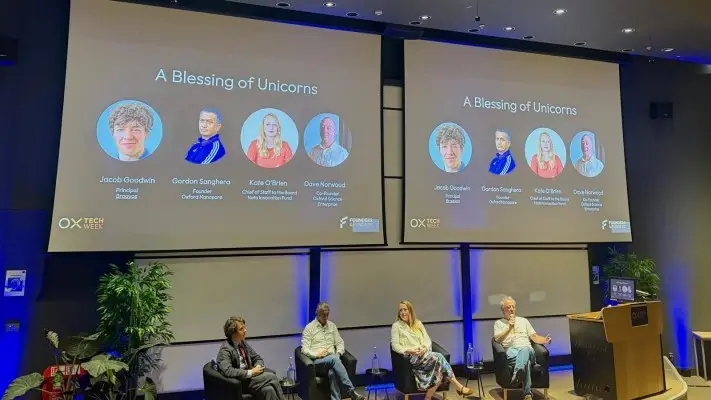
We were thrilled to attend the inaugural Ox Tech Week by Founders & Funders (26–29 May) — an innovation festival that brought together some of the brightest minds across Oxford's tech ecosystem.
It was an inspiring session to hear from founders about their journeys — the challenges, the breakthroughs, and the conviction it takes to build something genuinely new in the deep tech space.
Check out our post for insights from our time at Ox Tech Week.
Is the University model broken — and can AI fix it?
Corpora.ai's CEO and Co-founder Mel Morris CBE was recently featured in a piece by Research Professional News, sharing his views on university research.
UK universities are sitting on world-class research and consistently failing to convert it into companies. Most of the time, researchers don't think about where their work takes them long-term. Industry conversations never happen because projects run out of money before anyone can point to future value. And a deep fear that "someone is going to steal our ideas" holds the system back.
"We have a systemic crisis which says we have to get much better at understanding what research we're doing and where it takes us." To tackle this, universities need to embrace AI. For those who do it right, Mel believes this could transform institutions themselves — opening the door to better sponsorship, earlier funding, and stronger engagement with venture capital.
Read the full piece on Research Professional News.
Techspace Pod: Navigating the AI Transformation with Mel Morris CBE
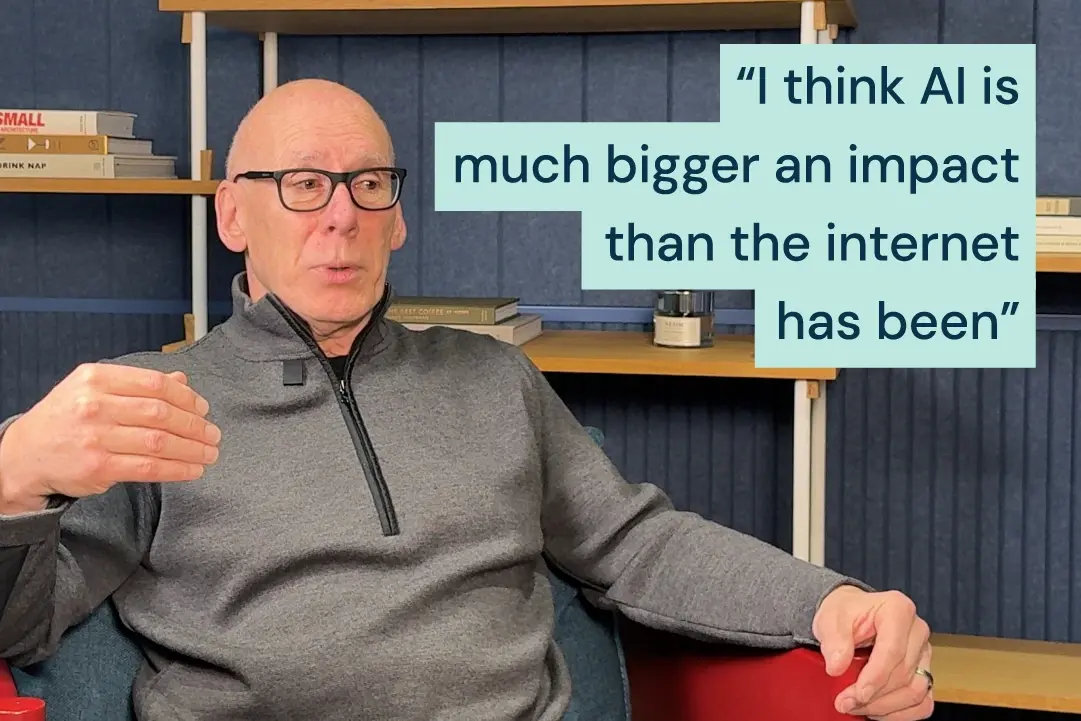
Mel Morris CBE sat down with Jane Wakefield to discuss the resilience required to lead through decades of technological transformation — from early internet pivots to the vibe coding revolution and everything in between.
Mel shares insights on why the technical moats of yesterday are disappearing, why AI-driven development means years of work can now be replicated in weeks, and how to build a successful company culture.
Matt Jones joins Corpora.ai as CCO
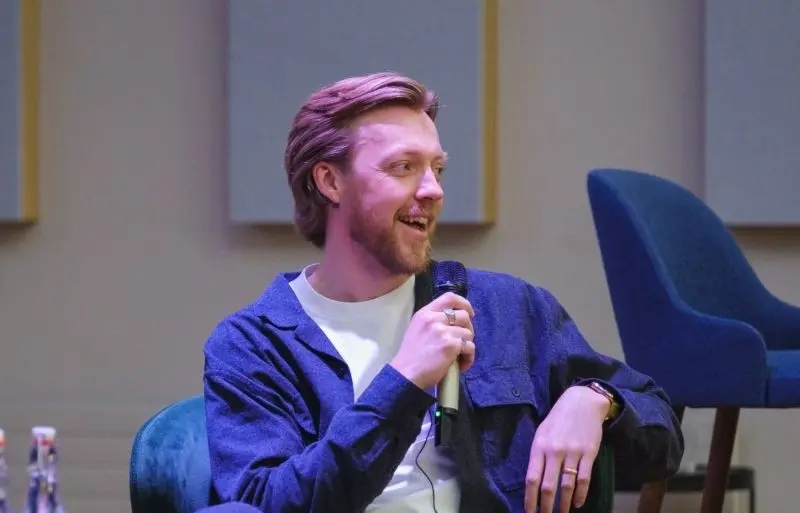
At the start of May, Matt Jones joined Corpora.ai as Chief Commercial Officer.
He previously worked at Microsoft, where he led global cloud and AI strategy for one of Microsoft's largest customers. Now he brings that blend of large-enterprise experience and hands-on AI deployment to Corpora, leading our commercial strategy and accelerating partnerships across the UK and beyond.
Thank you for reading, and see you in next month's newsletter!
Please contact us at [email protected] for any questions.